ライブラリ → 超低周波音の発生源
超低周波音は、十分に大きくゆっくりとした動きなら何からでも生まれます。大地の震え、波の衝突、嵐の渦、空気の流れ。発生源には自然で恒常的なものもあれば、ほんの数分だけ現れるもの、人間がつくり出すものもあります。「誰が鳴っているのか」を理解することは大切です。危険な現象を聴き取るには、それを背景の合唱から見分けられなければならないからです。
自然の発生源
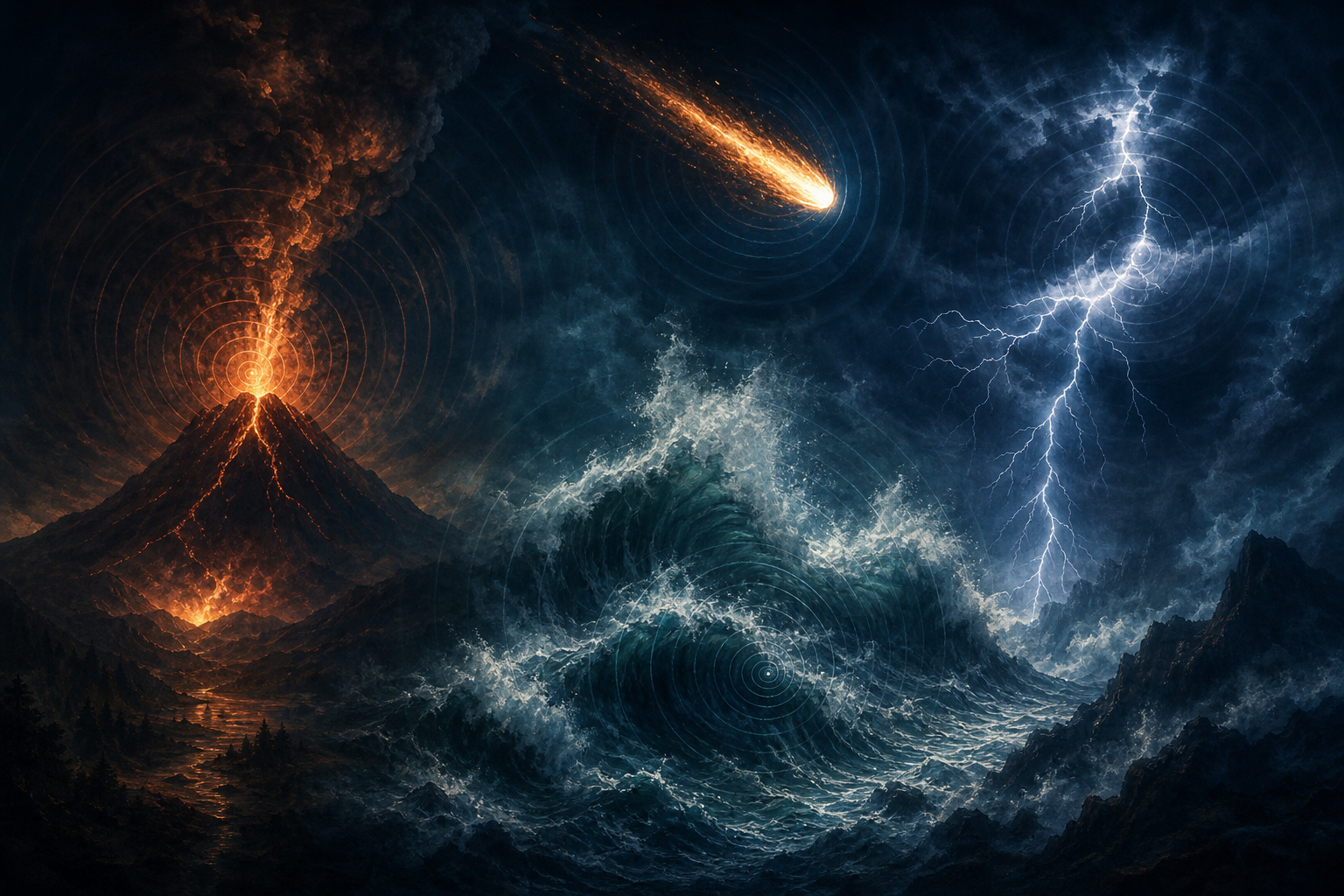
- 🌋火山と地震。 噴火は最も強力な発生源のひとつで、2022 年のフンガ・トンガからの波は世界中の機器が捉えました。1 超低周波音による火山の追跡は、すでに成熟した分野です。6
- 🌊海。 嵐の最中に逆向きに進む波がぶつかり合い、「マイクロバロム」 — 0.2 Hz 付近の絶え間ないうなり — を生み出します。2
- ⛈️雷雨と竜巻。 強い渦は超低周波音を放射し、ときには竜巻が地面に触れる前から鳴ります。4
- ☄️隕石。 大気に突入する火球は強力な衝撃波を生みます(チェリャビンスクを参照)。3 超低周波音の信号の形から、その物体のエネルギーを TNT 換算で推定できます。7
- 🏔️雪崩、滝、山を越える風。 絶え間ない地球物理学的な背景音。
人為的な発生源
人間も低周波では騒がしい存在です。採石場の発破、ロケットの打ち上げ、超音速機や通常の航空機、大型機械、風力タービン、そして都市全体。監視システムにとって、これは取り除くべき「雑音」ですが、核実験の監視にとっては逆に、それこそが狙う信号なのです。5
最大の難しさ
これらの発生源はすべて同時に鳴っています。海・気象・機械の背景の合唱から「本物の現象」を切り分けることが、中心的な科学の課題です。複数のセンサーからなるアレイと、波がどこから、どれくらいの速さで来たのかを見るアルゴリズムが役立ちます。
知っていましたか?
- CTBTO のネットワークは、数千キロメートル彼方のロケット打ち上げや大規模な採石場の発破を「聴き取り」、それらを地震と見分けることができます。
- オーロラさえ超低周波音で「鳴り」ます。脈動するオーロラは、見かけの伝播速度が高い超低周波音を生み、米国アラスカ州フェアバンクスで記録されました(Wilson & Olson, 2005)。
- 地球で最も恒常的な発生源は海です。マイクロバロムは決して鳴りやみません。
これが HERD にとって重要な理由
私たちのネットワークは、地球の絶え間ないうなりのなかから危険な現象の「シグネチャ(特徴)」を見分けることを学びます。発生源を知れば知るほど、本当に重要なものをより正確に捉えられます。
この記事の出典
これらの出典はHERD の全ライブラリ(272件の検証済み出典)の一部です。意味検索とトピック絞り込みに対応。
- 査読あり Matoza R.S. et al. (2022). Global seismoacoustic observations of the January 2022 Hunga eruption, Tonga. Science 377. science.org
- 査読あり Waxler R., Gilbert K.E. (2006). The radiation of atmospheric microbaroms by ocean waves. JASA 119(5). pubs.aip.org
- 査読あり Le Pichon A. et al. (2013). The 2013 Russian fireball largest ever detected by CTBTO infrasound sensors. GRL 40. agupubs.wiley.com
- 査読あり Bedard A.J. (2005). Low-frequency atmospheric acoustic energy associated with vortices produced by thunderstorms. Mon. Wea. Rev. 133(1). journals.ametsoc.org
- 総説 Bedard A.J., Georges T.M. (2000). Atmospheric Infrasound. Physics Today 53(3). physicstoday.aip.org
- 査読あり総説 Fee D., Matoza R.S. (2013). An overview of volcano infrasound: from Hawaiian to Plinian, local to global. J. Volcanol. Geotherm. Res. 249. doi.org
- 査読あり Edwards W.N., Brown P.G., ReVelle D.O. (2006). Estimates of meteoroid kinetic energies from observations of infrasonic airwaves. J. Atmos. Sol.-Terr. Phys. 68. doi.org
- 査読あり Wilson C.R., Olson J.V. (2005). High trace-velocity infrasound from pulsating auroras at Fairbanks, Alaska. GRL 32. doi.org
- レビュー Johnson J.B., Ripepe M. (2011). Volcano infrasound: A review. Journal of Volcanology and Geothermal Research 206(3-4). doi.org
- レビュー Silber E.A., Boslough M., Hocking W.K., Gritsevich M., Whitaker R.W. (2018). Physics of meteor generated shock waves in the Earth's atmosphere - A review. Advances in Space Research 62(3). doi.org
- 査読あり Mutschlecner J.P., Whitaker R.W. (2005). Infrasound from earthquakes. Journal of Geophysical Research: Atmospheres 110(D1). doi.org
- 査読あり Farges T., Blanc E. (2010). Characteristics of infrasound from lightning and sprites near thunderstorm areas. Journal of Geophysical Research: Space Physics 115(A6). doi.org
- 歴史 ReVelle D.O. (1976). On meteor-generated infrasound. Journal of Geophysical Research 81(7). doi.org
- レビュー Campus P., Christie D.R. (2010). Worldwide Observations of Infrasonic Waves. In: Infrasound Monitoring for Atmospheric Studies (Springer). doi.org
- 査読あり Gi N., Brown P. (2017). Refinement of bolide characteristics from infrasound measurements. Planetary and Space Science 143. doi.org
引用方法 · コピー
HERD (2026). 何が超低周波音を生むのか. HERD — インフラサウンド・ライブラリ. https://theherd.network/infrasound/ja/sources