การได้ยินอินฟราซาวด์ไม่ใช่แค่ "ตั้งไมโครโฟนทิ้งไว้" สัญญาณนั้นอ่อนมาก เสียงพื้นหลังมหาศาล และศัตรูตัวฉกาจคือลม ตลอดหลายทศวรรษได้ก่อตัวเป็นเทคโนโลยีที่ครบถ้วน และแกนกลางของมันคือเครือข่ายนานาชาติที่สร้างขึ้นเพื่อเฝ้าระวังการทดสอบนิวเคลียร์
เครือข่ายที่ฟังทั้งโลก
องค์กรสนธิสัญญาห้ามทดลองนิวเคลียร์โดยสมบูรณ์ (CTBTO) ได้ติดตั้ง ระบบเฝ้าระวังระหว่างประเทศ (IMS) — สถานีอินฟราซาวด์หลายสิบแห่งทั่วโลกที่ทำงานต่อเนื่องตลอดเวลา1 ระบบนี้เองที่จับอุกกาบาตเชเลียบินสค์และคลื่นจากตองกาได้2 และก่อนหน้านั้นยังจับอินฟราซาวด์จากสึนามิสุมาตราปี 2004 ได้ด้วย3 ภารกิจโดยตรงของมันคือดักจับการระเบิดนิวเคลียร์: อินฟราซาวด์จากการทดสอบใต้ดินของเกาหลีเหนือปี 2017 ถูกบันทึกโดยสถานีที่อยู่ห่างออกไป 400 กม.6 และในปัจจุบันอินฟราซาวด์ถูกใช้เฝ้าติดตามภูเขาไฟทั่วโลกเป็นกิจวัตร7 สำหรับการปะทุแบบระเบิด มีระบบเตือนภัยล่วงหน้าด้วยอินฟราซาวด์ที่ใช้งานจริงแล้ว (Ripepe et al., 2018)12 — เช่น เครือข่ายสัญญาณไหวสะเทือน-เสียงที่หนาแน่นซึ่งเตือนการปะทุรุนแรงของสตรอมโบลีในปี 2019 (Ripepe et al., 2021)13
ไมโครบารอมิเตอร์และอาเรย์
หัวใจของสถานีคือ ไมโครบารอมิเตอร์ เครื่องมือที่วัดความผันผวนของความดันเพียงเล็กน้อย (เศษเสี้ยวของพาสคาล) เซ็นเซอร์ตัวเดียวบอกอะไรได้ไม่มากนัก จึงนำมารวมกันเป็น อาเรย์: เครื่องมือหลายตัวที่วางห่างกันไม่กี่ร้อยเมตร เมื่อเปรียบเทียบว่าคลื่นมาถึงเซ็นเซอร์แต่ละตัวต่างกันกี่เศษเสี้ยววินาที ก็สามารถคำนวณได้ว่าคลื่นมาจากทิศทางใดและด้วยความเร็วเท่าใด — และนั่นช่วยแยกเหตุการณ์จริงออกจากเสียงรบกวนแบบสุ่ม
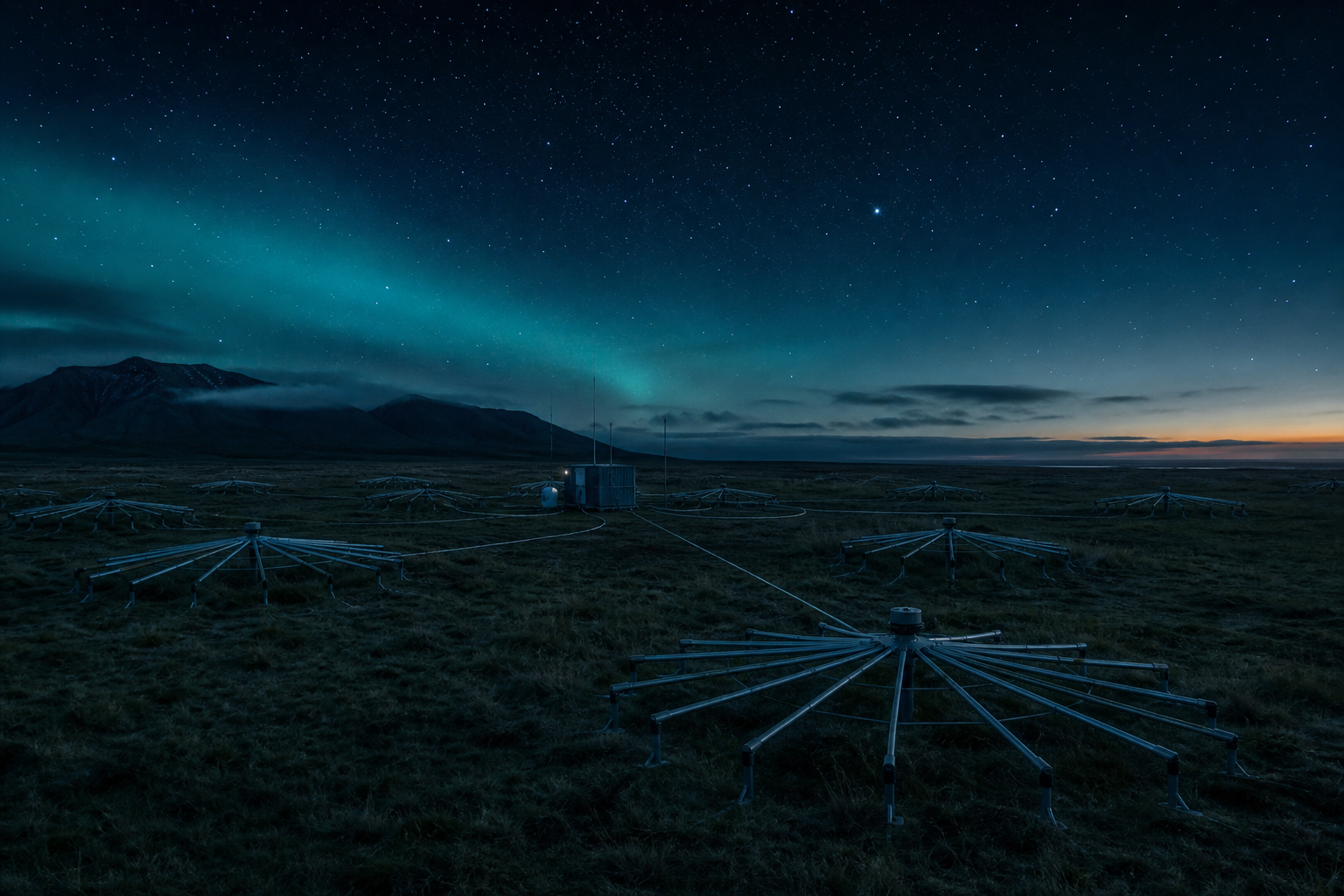
ศัตรูตัวฉกาจคือลม
ความปั่นป่วนของลมสร้าง "เสียงรบกวนความดัน" ปลอม ๆ ขึ้นตรงที่ตัวเซ็นเซอร์ เพื่อกดมันลง เครื่องมือแต่ละตัวจึงต่อกับ ชุดท่อ (pipe arrays / wind-noise rosettes): มันเฉลี่ยความดันทั่วพื้นที่และหน่วงลมกระโชกเฉพาะจุด เหลือไว้แต่คลื่นที่สอดคล้องกัน นี่คือหนึ่งในองค์ความรู้สำคัญของอินฟราซาวด์ภาคสนาม: การวัดแสดงว่าชุดท่อเส้นผ่านศูนย์กลาง 18 เมตรลดเสียงรบกวนจากลมได้ 15–20 เดซิเบล5
สัญญาณกับเสียงรบกวนจากสภาพอากาศ
ลมไม่ใช่กลลวงเดียว แนวปะทะอากาศที่เคลื่อนผ่านสร้างการเปลี่ยนแปลงความดันที่ สอดคล้องกัน ในหลายสถานี — ซึ่งเป็นสิ่งที่อัลกอริทึมกำลังตามหาพอดี การแยกอินฟราซาวด์เชิงธรณีฟิสิกส์ออกจากเสียงรบกวนของสภาพอากาศจึงเป็นโจทย์ทางวิทยาศาสตร์ที่แท้จริง และไม่ได้แก้ "ด้วยสายตา": วิธีสหสัมพันธ์ของอาเรย์ PMCC จะตรวจสอบว่าความหน่วงระหว่างเซ็นเซอร์สอดคล้องกับคลื่นระนาบเดียวหรือไม่ และทิ้งสิ่งที่ไม่สอดคล้องไป8 การวิเคราะห์ข้อมูล IMS ขนาดใหญ่แสดงให้เห็นว่าในทางปฏิบัติจะแยกเสียงรบกวนจากลมที่ไม่สอดคล้องออกจากสัญญาณ "ปลอม" ที่สอดคล้องกันได้อย่างไร และจะคำนวณความสามารถในการตรวจจับจริงของเครือข่ายได้อย่างไร9 อาเรย์สมัยใหม่ใช้แมชชีนเลิร์นนิงและดีปเลิร์นนิงเพื่อจัดหมวดหมู่สัญญาณอินฟราซาวด์มากขึ้นเรื่อย ๆ (Bishop et al., 2022)10
- อาเรย์อินฟราซาวด์จากเซ็นเซอร์ 4–5 ตัว จับการเกิดหิมะถล่มที่อยู่ห่างออกไปหลายกิโลเมตรได้แบบใช้งานจริงในทุกสภาพอากาศ4
- วิธีเดียวกันนี้ถูกนำไปใช้กับภูเขาไฟ ลูกไฟอุกกาบาต และการเฝ้าระวังการระเบิด
- อัลกอริทึมสหสัมพันธ์ (เช่น PMCC) ค้นหาสัญญาณในกระแสข้อมูลต่อเนื่องได้โดยอัตโนมัติ8
- แผ่นดินไหวถูก "ได้ยิน" เป็นครั้งแรกจากบอลลูนสตราโตสเฟียร์ผ่านลายเซ็นเสียงของมัน (Brissaud et al., 2021) — ต้นแบบของเครือข่ายเซ็นเซอร์บนบอลลูน11
วิทยาศาสตร์ระดับใหญ่ได้พิสูจน์หลักการนี้แล้วบนสถานีราคาแพง ภารกิจของเราคือนำแนวคิดเดียวกัน (อาเรย์ การกรองลม สหสัมพันธ์) มาใส่ใน โหนดราคาถูก แล้วเอาชนะด้วยจำนวน นั่นคือเรื่องของบทความถัดไป →
แหล่งอ้างอิงของบทความนี้
แหล่งอ้างอิงเหล่านี้เป็นส่วนหนึ่งของคลังความรู้ HERD ทั้งหมด — 363 แหล่งอ้างอิงที่ตรวจสอบแล้ว พร้อมค้นหาด้วยความหมายและตัวกรองตามหัวข้อ
- องค์กร CTBTO. Infrasound monitoring (International Monitoring System). ctbto.org
- ผ่านการตรวจทาน Matoza R.S. et al. (2022). Global seismoacoustic observations of the January 2022 Hunga eruption, Tonga. Science 377. science.org
- ผ่านการตรวจทาน Le Pichon A. et al. (2005). Infrasound associated with 2004–2005 Sumatra earthquakes and tsunami. GRL 32. agupubs.wiley.com
- ผ่านการตรวจทาน Marchetti E. et al. (2015). Infrasound array detection and front velocity of snow avalanches. NHESS 15. nhess.copernicus.org
- ผ่านการตรวจทาน Hedlin M.A.H., Alcoverro B., D'Spain G. (2003). Evaluation of rosette infrasonic noise-reducing spatial filters. J. Acoust. Soc. Am. 114(4). doi.org
- ผ่านการตรวจทาน Assink J.D., Averbuch G., Shani-Kadmiel S., Smets P., Evers L. (2018). A seismo-acoustic analysis of the 2017 North Korean nuclear test. Seismol. Res. Lett. 89(6). geoscienceworld.org
- ผ่านการตรวจทานบทวิจารณ์ Fee D., Matoza R.S. (2013). An overview of volcano infrasound: from Hawaiian to Plinian, local to global. J. Volcanol. Geotherm. Res. 249. doi.org
- ผ่านการตรวจทาน Cansi Y. (1995). An automatic seismic event processing for detection and location: the PMCC method. GRL 22(9). doi.org
- ผ่านการตรวจทาน Vergoz J. et al. (2022). IMS infrasound data products for atmospheric studies and civilian applications. Earth Syst. Sci. Data 14. essd.copernicus.org
- ผ่านการตรวจทาน Bishop J.W. et al. (2022). Deep learning categorization of infrasound array data. JASA 152(4). doi.org
- ผ่านการตรวจทาน Brissaud Q. et al. (2021). The first detection of an earthquake from a balloon using its acoustic signature. GRL 48. doi.org
- ผ่านการตรวจทาน Ripepe M. et al. (2018). Infrasonic early warning system for explosive eruptions. JGR Solid Earth 123. doi.org
- ผ่านการตรวจทาน Ripepe M. et al. (2021). Dense seismo-acoustic network warning of the 2019 paroxysmal Stromboli eruptions. Sci. Rep. 11. doi.org
- บทวิจารณ์ Christie D.R., Campus P. (2010). The IMS Infrasound Network: Design and Establishment of Infrasound Stations. In: Infrasound Monitoring for Atmospheric Studies (Springer). doi.org
- บทวิจารณ์ Marty J. (2019). The IMS Infrasound Network: Current Status and Technological Developments. In: Infrasound Monitoring for Atmospheric Studies, 2nd ed. (Springer). doi.org
- บทวิจารณ์ Brachet N., Brown D., Le Bras R., Cansi Y., Mialle P., Coyne J. (2010). Monitoring the Earth's Atmosphere with the Global IMS Infrasound Network. In: Infrasound Monitoring for Atmospheric Studies (Springer). doi.org
- ผ่านการตรวจทานโดยผู้เชี่ยวชาญ Green D.N., Bowers D. (2010). Estimating the detection capability of the International Monitoring System infrasound network. Journal of Geophysical Research: Atmospheres 115(D18). doi.org
- ผ่านการตรวจทานโดยผู้เชี่ยวชาญ Le Pichon A., Ceranna L., Vergoz J. (2012). Incorporating numerical modeling into estimates of the detection capability of the IMS infrasound network. Journal of Geophysical Research: Atmospheres 117(D5). doi.org
- ผ่านการตรวจทานโดยผู้เชี่ยวชาญ Le Pichon A. et al. (2015). Incorporating atmospheric uncertainties into estimates of the detection capability of the IMS infrasound network. The Journal of the Acoustical Society of America 137(3). doi.org
- ผ่านการตรวจทานโดยผู้เชี่ยวชาญ Matoza R.S. et al. (2017). Automated detection and cataloging of global explosive volcanism using the International Monitoring System infrasound network. Journal of Geophysical Research: Solid Earth 122(4). doi.org
- ผ่านการตรวจทานโดยผู้เชี่ยวชาญ Ceranna L., Le Pichon A., Green D.N., Mialle P. (2009). The Buncefield explosion: a benchmark for infrasound analysis across Central Europe. Geophysical Journal International 177(2). doi.org
- ผ่านการตรวจทานโดยผู้เชี่ยวชาญ Ottemoller L., Evers L.G. (2008). Seismo-acoustic analysis of the Buncefield oil depot explosion in the UK, 2005 December 11. Geophysical Journal International 172(3). doi.org
- ผ่านการตรวจทานโดยผู้เชี่ยวชาญ Evers L.G., Siegmund P. (2009). Infrasonic signature of the 2009 major sudden stratospheric warming. Geophysical Research Letters 36(23). doi.org
- ผ่านการตรวจทานโดยผู้เชี่ยวชาญ Bowman D.C., Albert S.A. (2018). Acoustic event location and background noise characterization on a free-flying infrasound sensor network in the stratosphere. Geophysical Journal International 213(3). doi.org
- บทวิจารณ์ Johnson J.B. (2019). Local Volcano Infrasound Monitoring. In: Infrasound Monitoring for Atmospheric Studies, 2nd ed. (Springer). doi.org
- บทวิจารณ์ Le Pichon A., Blanc E., Hauchecorne A. (eds.) (2019). Infrasound Monitoring for Atmospheric Studies (2nd ed.). Springer, Cham. doi.org
- องค์กร EarthScope Consortium (formerly IRIS) (2024). EarthScope Consortium - seismic and infrasound facilities and open data (SAGE). earthscope.org. earthscope.org
- องค์กร EarthScope / IRIS Data Management Center (2024). IRIS DMC (EarthScope) data services - open seismological and infrasound waveform archive. ds.iris.edu. ds.iris.edu
HERD (2026). อินฟราซาวด์ถูกดักจับอย่างไร. HERD — คลังความรู้อินฟราซาวด์. https://theherd.network/infrasound/th/monitoring